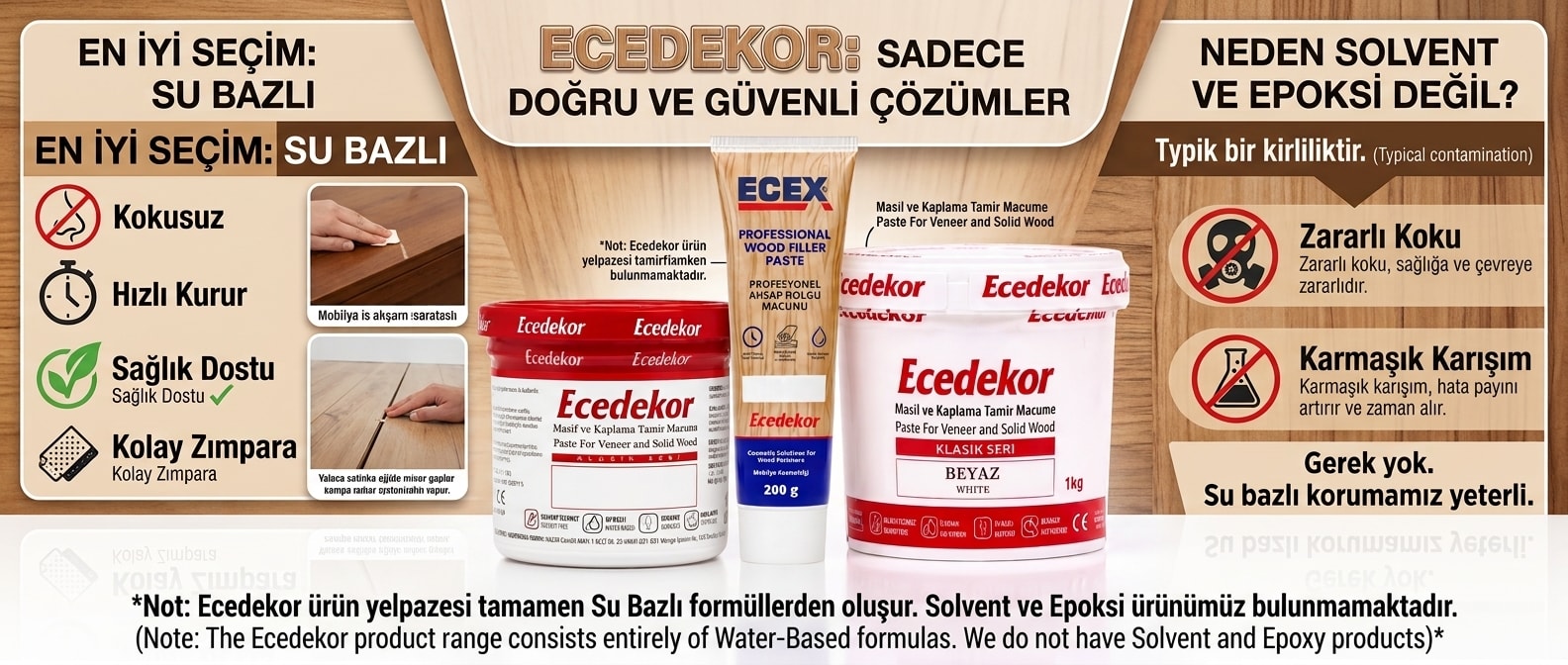
Wood filler is produced in three main types: water-based, solvent (synthetic)-based, and epoxy. Water-based wood filler dries quickly, is odorless, and is the standard for indoor furniture and hardwood floor repairs; solvent-based wood filler is more resistant to external factors; and epoxy is used for jobs requiring the highest strength, such as structural repairs. This guide provides a comparative overview of which putty is the right choice for each job.
Comparison at a Glance
| Feature | Water-Based | Solvent-Based | Epoxy |
|---|---|---|---|
| Drying Time (thin coat) | 20–40 min | 1–3 hours | 4–24 hours, depending on the mixture |
| Odor | None / very slight | Noticeable | Noticeable during mixing |
| Sanding | Very easy | Easy | Difficult (becomes very hard when cured) |
| Water/moisture resistance | Moderate (after drying) | Good | Very good |
| Indoor | Ideal | Suitable (ventilation required) | Excessive if not necessary |
| Outdoors | Depends on the product | Good | Very good |
| Cleaning | With water | With thinner | With acetone before it hardens |
| Typical uses | Furniture, hardwood floors, interior trim | Exterior trim, garden furniture | Rot repair, structural filler |
Note: Values are typical ranges; refer to the label of the product you are using for exact technical data.
Water-Based Wood Filler
This is the most commonly used type in Turkey and forms the basis of the formulas Ecedekor has been developing since 1998. Advantages of water-based wood filler:
- Dries quickly: Thin coats are ready for sanding in 20–40 minutes; painting can be done the same day.
- Odorless: You can work comfortably indoors, at home, or in the workshop; there are no solvent fumes.
- Easy to sand: A smooth surface is easily achieved for fine detailing.
- Washes off with water: Spatulas and hands can be cleaned with soapy water; no thinner is needed.
- Environmentally and health-friendly: With its low volatile organic compound (VOC) content, it does not compromise indoor air quality. Ecedekor formulas contain no harmful chemicals and are vegan-friendly (details: health-friendly putty guide).
Water-based putty is the top choice for furniture repair, hardwood floor joints, screw holes, and interior woodwork. You can explore the wood filler and repair putty category for different packaging options: a 200-gram tube for small repairs, a 200-gram jar for workshop benches, and a 1-kilogram bucket for professional, heavy-duty use.
Solvent (Synthetic)-Based Wood Putty
These putties, which use resins soluble in solvents as their binder, are more resistant to moisture and temperature changes once dry. They are preferred for exterior trim, garden furniture, and areas exposed to moisture. However, they have a longer drying time, emit a noticeable odor during application, and require good ventilation in enclosed spaces. Tools are cleaned with paint thinner.
Epoxy Wood Putty
Epoxy fillers, prepared by mixing two components (resin + hardener), provide structural strength to wood. They are used in applications requiring load-bearing capacity, such as repairing rotted window frame sections or stair treads. Once cured, it provides very high strength but is difficult to sand, is expensive, and is affected by errors in the mixing ratio. It is not necessary for everyday furniture or hardwood floor repairs; follow the “right job, right putty” principle and use it only for major repairs.
Which One to Use in Which Situation?
- Screw holes, scratches, and impact marks on furniture: Water-based filler.
- Floorboard joints and floor cracks: Water-based, bucket-form (see the floor repair guide).
- Exterior door and window frames, garden furniture: Water-based filler protected with polish or varnish (Ecedekor wood fillers are polishable—see the outdoor guide) or a solvent-based formula.
- Rotten wood, structural repairs: Epoxy filler.
- Fine work such as musical instruments: Water-based, fine-grained putty (see the guitar repair guide).
Color Selection
Color matching is just as important as the type of filler in ensuring the repair is invisible. If the area will be covered with paint, color is not critical; however, with transparent finishes like varnish or lacquer, the color of the filler will show through exactly. It’s generally safer to choose a color close to the lightest shade of the wood; dark putty will look like a stain on light wood. You can select the shade closest to your wood from Ecedekor’s color chart, which includes over 30 colors.
Frequently Asked Questions
What is the best wood filler?
There is no single “best” option; it depends on the job at hand. For indoor furniture and hardwood floor repairs, water-based wood filler is the standard choice due to its speed, lack of odor, and ease of sanding. For outdoor use, solvent-based or outdoor-compatible formulas—or epoxy for structural repairs—are the right choice.
Is water-based wood filler water-resistant?
Once fully cured, it withstands everyday moisture (wiping, brief contact). On surfaces constantly exposed to moisture and external factors, apply a coat of varnish or lacquer over the filler—with this protective layer, water-based Ecedekor fillers can even be used outdoors. In areas constantly submerged in water, epoxy is a safer choice.
Is there a difference between wood filler and repair filler?
In everyday use, the two terms usually refer to the same product. “Filler” emphasizes the function of filling gaps, while “repair putty” emphasizes the purpose of repair; in Ecedekor products, both needs are met with the same formula.
How do I match the putty color to the wood?
If you’re using a clear finish, choose the putty shade that most closely matches the sanded (bare) color of the wood; if you’re unsure, test it on an inconspicuous area. If necessary, you can mix two colors to achieve an intermediate shade.
Can epoxy putty be used for any job?
Technically, yes, but it’s not necessary. Epoxy is expensive, difficult to sand, and requires mixing the two components in the correct ratio. For surface repairs, water-based filler provides both faster and more economical results.