A scratch on your furniture, a gap at a parquet joint, an old screw hole in a door or a dent in a window frame… The most common flaws in wood can be filled in minutes with the right wood repair putty. But with so many products on the market, what actually determines wood repair putty prices, which pack size suits which job, and how do you spend your budget most efficiently? This guide explains the factors behind the price, the pack-size cost logic and the right buying strategy, updated for 2026.
Let's be clear from the start: wood repair putty has no single "list price". The price varies by pack size, formulation, color and the quality of the brand. Once you understand the factors below, you can easily judge for yourself which product fits which budget and job.
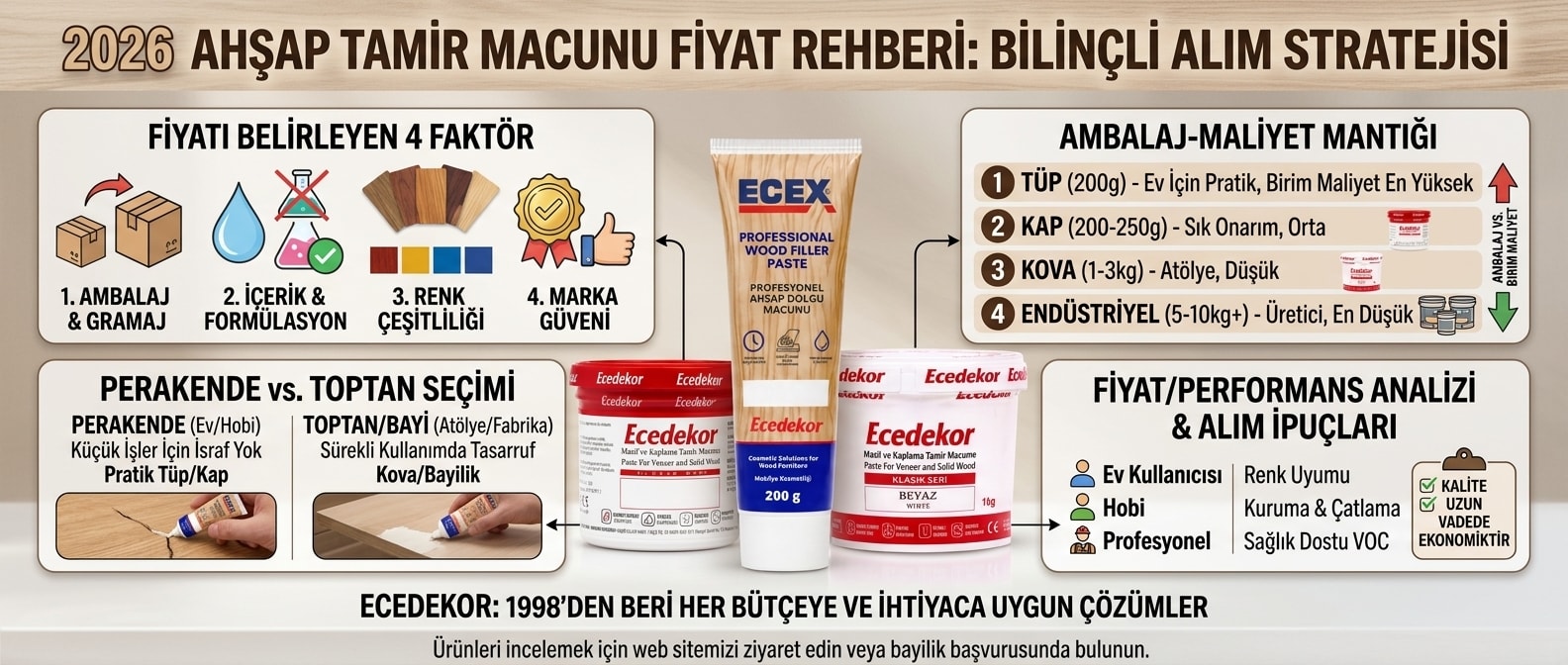
The 4 Key Factors That Determine Wood Repair Putty Prices
Sound budgeting starts with knowing what drives the price. Wood repair putty prices are shaped under four main headings.
1. Pack Size and Weight
Pack size is the single biggest price driver. Small packs have a higher unit cost (per kilogram), while large packs are noticeably cheaper per unit. Buying only as much as you need prevents both waste and unnecessary spending.
- Tube (200 g): The most practical, entry-level option for home users. Ideal for the odd scratch, screw hole and small repair.
- Cup / tub (200-250 g): For those who do frequent small repairs and for hobby users. Suited to working with a spatula; the unit cost is slightly lower than a tube.
- Bucket (1-3 kg): For furniture workshops, parquet fitters and heavy professional use. The per-kilogram cost drops compared with retail.
- Industrial size (5-10 kg and above): For joineries, furniture manufacturers and mass production. Offers the lowest unit cost.
You can compare the different pack options in the wood filler and repair putties category: a 200 g tube for small repairs, a 1 kg bucket for workshop and professional use, and so on.
2. Content and Formulation
The putty's content directly affects both its performance and its price. The main types are:
- Water-based putties: Fast-drying, odorless, easy-to-sand and water-cleanable, environmentally and health-friendly formulas. They are the standard for indoor furniture and parquet repair, and their production cost is generally lower. The first choice for home users.
- Solvent (synthetic) based putties: After curing they are more resistant to moisture and the elements; preferred for exterior joinery and garden furniture. Their price can be somewhat higher because of the resins they contain.
- Epoxy and special formulas: For the most demanding jobs such as rot and structural repair; this is the highest-priced group per unit. Not required for everyday furniture and parquet repair.
You can find out which formula is right for which job, and the price-versus-durability balance, in detail in our wood putty types comparison guide.
3. Color Range and Tone
The color option also plays a role in pricing:
- Standard tones: Common wood colors such as oak, walnut, pine and beech are usually more affordable because they are mass-produced.
- Special tones: Special colors such as wenge, ebony, white or black can be priced differently from standard tones.
Choosing the right tone is the key to an invisible repair. From Ecedekor's chart of more than 30 colors you can pick the closest match to your wood, and for tone-matching tips see our color selection guide.
4. Brand Reliability and Quality
A quality putty may look a little more expensive at the first purchase, but it lowers your cost over the long run. Cheap, low-quality putties can crack, fade or lift off the surface in a short time, which means redoing the repair again and again. A repair done once with a solid formula saves both time and money. When you assess the price, weigh "how many years does it stay sound" as much as "what am I paying per kilogram".
Unit-Cost Logic by Pack Size
The table below summarizes the unit-cost trend and who each pack suits, rather than exact figures. Because current product prices change with economic conditions, we offer a framework to help you choose the right pack.
| Pack | Best For | Unit-Cost Trend | Typical Use |
|---|---|---|---|
| Tube (200 g) | Home user | Highest (small pack) | Single scratch, screw hole, small repair |
| Cup / tub (200-250 g) | Hobby + practical use | Medium | Frequent small repairs, working with a spatula |
| Bucket (1-3 kg) | Workshop / professional | Low | Furniture workshop, parquet repair |
| Industrial (5-10 kg and above) | Manufacturer / mass work | Lowest | Factory, heavy and continuous use |
Note: The values are a unit-cost trend; for current list prices visit the relevant product page. The rule is simple: the bigger the pack, the lower the per-kilogram cost — but only if you will use up the product within a reasonable time.
Retail or Wholesale: Which Is More Advantageous?
The right purchasing method is an important part of using your budget efficiently:
- Retail (individual) purchase: Ideal for home users and those who repair occasionally. Buying a large pack for a job you will do only a few times can cause the product to dry out and go to waste. You can review the products in the wood filler and repair putties category.
- Wholesale / dealer purchase: For carpenters, furniture makers and decoration firms who use putty continuously, the per-kilogram cost falls significantly. For wholesale terms and dealer-specific pricing you can make a dealership application.
In short: retail for one-off small jobs, wholesale/dealer purchase for continuous use — the latter is more economical in the long run.
Price/Performance: Which Product for Which User?
Getting your money's worth starts with choosing the pack and formula best suited to your needs:
- Home user: A 200 g tube or cup, water-based putty. Many repairs on a small budget, zero waste.
- Hobby and small workshop: A 1 kg bucket. More economical than retail and lasts a long time.
- Professional furniture repairer: A 3 kg bucket or 5 kg industrial pack; the most sensible solution for continuous, heavy use.
- Furniture manufacturer / factory: A 10 kg or larger pack plus a dealership for the lowest unit cost.
What to Watch For When Buying Wood Repair Putty
Price is only the starting point of the decision. To choose the right product, pay attention to these factors:
- Color match: If a clear varnish/lacquer will be used, the putty color shows exactly; pick a color close to the lightest tone of the wood. Under opaque paint the color is not critical.
- Drying and cracking performance: The putty should dry within a reasonable time and must not crack or shrink after drying. Low-quality products cause trouble here.
- Health and content: Especially for indoor and children's-room furniture, prefer odorless, low-VOC formulas that contain no chemicals harmful to health.
- Workability: Being sandable, paintable and lacquerable makes the repair invisible and permanent.
- Brand and support: A known, experienced brand means product continuity, technical support and consistent quality.
Wood Repair Putty at Ecedekor: Quality and Buying Advantages
Producing wood filler and repair putty since 1998, Ecedekor offers solutions for every need and budget:
- Wide product range: Different sizes from tube to industrial pack, more than 30 colors and various formulations.
- Health-friendly formulas: Odorless, water-based content that contains no chemicals harmful to health and is vegan-friendly; safe for indoor use.
- Ease of application: A sandable, paintable and lacquerable structure; the repair goes unnoticed.
- Delivery across Türkiye: You receive your products quickly.
- Dealer-specific terms: Wholesale opportunities for continuous users — details on the dealership page.
To review the products and see current options, take a look at the wood filler and repair putties category.
Frequently Asked Questions
What does the price of wood repair putty depend on?
On four main factors: pack size (high unit cost in a small pack, low in a large one), content/formulation (water-based, solvent-based, epoxy), color (standard tones more affordable, special tones can differ) and the quality of the brand. You make the best budget decision by weighing these four headings together.
Which is the most affordable wood repair putty?
For home users, water-based putties in a 200 g tube or cup are usually the most affordable entry option. They let you do many repairs on a small budget and prevent product waste. For continuous users, buckets and industrial packs with a low per-kilogram cost are more economical.
Is there a price advantage in wholesale purchasing?
Yes. The bigger the pack, the more markedly the per-kilogram cost falls; for businesses that use putty continuously, wholesale purchasing brings serious savings over the long run. For dealer-specific terms and wholesale pricing you can make a dealership application.
Does color affect the price of putty?
Standard wood tones (oak, walnut, pine, beech) are generally more affordable because they are mass-produced; special tones such as wenge, ebony, white or black can be priced differently. In color selection your priority should be a match to your wood, not the price — the wrong tone gives the repair away, however cheap it is.
Which is more economical, cheap putty or quality putty?
Quality putty is more economical in the long run. A low-quality product cracks, fades or lifts off; you redo the repair. A repair done once with a solid formula saves both time and material. Assess the price by "how many years it lasts" as much as by "cost per kilogram".
Where can I find the current price of wood repair putty?
Because current prices change with economic conditions, the most accurate information is on the product pages: you can review the products in the wood filler and repair putties category. For wholesale/dealer pricing you can reach us through a dealership application.
Conclusion
Wood repair putty prices are not a single figure but a range that varies by pack size, content, color and quality. To make the right decision, look not only at the price tag but also at the product's quality, its formula, the right pack size and the reliability of the brand. While affordable, practical tube/cup formats are ideal for home users, wholesale/dealer purchasing is the most economical route in the long run for continuous users. With the experience it has built up since 1998, Ecedekor offers quality, health-friendly wood repair putty solutions to suit every budget.